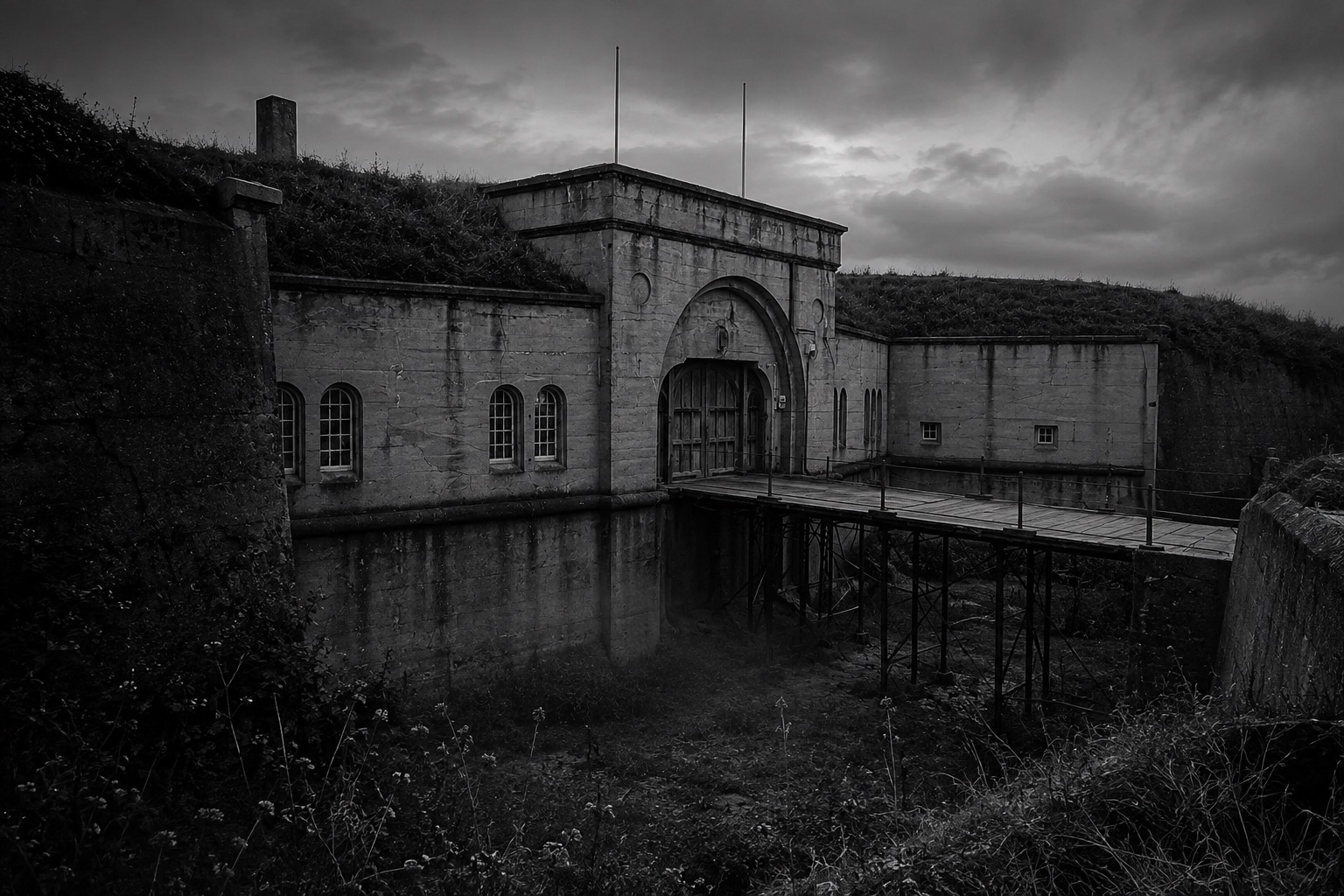
Investigated by KASE
KASE has investigated the location directly. Where available, you can follow the record to our investigation report, video, podcast or evidence review and see what the team actually found.
How to read the directory
This directory brings together KASE investigations, recorded accounts and local folklore. We show which is which, where the information comes from and what you need to know before visiting. A place appearing here does not mean that a haunting has been proved.
Three labels. No blurred claims.
K · 01Investigated by KASE D · 02Documented reports F · 03Folklore & oral historySource first · access checked · uncertainty stated
The source labels
KASE has investigated the location directly. Where available, you can follow the record to our investigation report, video, podcast or evidence review and see what the team actually found.
The reported activity can be traced to a named account, archive, publication or more than one recorded source. That tells you the story has a documentary trail; it does not prove what caused the experience.
The story survives through local tradition, oral history or later retellings. These accounts are an important part of Kent's haunted landscape, but we present them as folklore rather than confirmed fact.
How stories are checked
Old stories are often repeated without a source, attached to the wrong building or exaggerated over time. We check the parts that can be checked and make uncertainty clear where it remains.
We make sure the story refers to the location shown, not another place with a similar name.
Heritage records, archives and official information help us establish dates, buildings and events.
We look for the earliest or clearest source available and identify later retellings as such.
A reported sighting, a local legend and a KASE observation are not treated as the same kind of evidence.
We distinguish public attractions from private land, restricted sites, unsafe roads and offshore locations.
Reading the map
The marker helps you find the place connected with the record. Depending on the location, it may show a building, entrance, village centre, section of road or a wider site.
Visiting responsibly
Always follow the current guidance from the owner or venue. Opening hours, ticketing and access arrangements can change after a record is reviewed.
Use the venue's official website for current opening times, booking and access information.
Do not enter land or buildings without clear permission from the owner.
Road legends are included for their history, not as places to park, walk or investigate.
Leave structures, graves, wildlife and the surrounding landscape exactly as you found them.
Corrections and local knowledge
If you have a source, a correction, a current access update or a first-hand local account, send it to us. We review submissions before changing the directory, and we may contact you if we need more detail.
Suggest or correct a location